Suggested Uses:
- Betta from hatching to sub-adult
- Corydoras from fry to 1/2 inch sub-adults
- Newts and Salamanders
- Apistogramma fry to 1/2 inch
- Killifish from fry through adult
- Gourami from 1/4 inch through adult
- Guppy and other livebearer fry through adult
Interested in learning more about brine shrimp? Ask us!
Brine Shrimp: An Essential Food for Aquatic Larvae
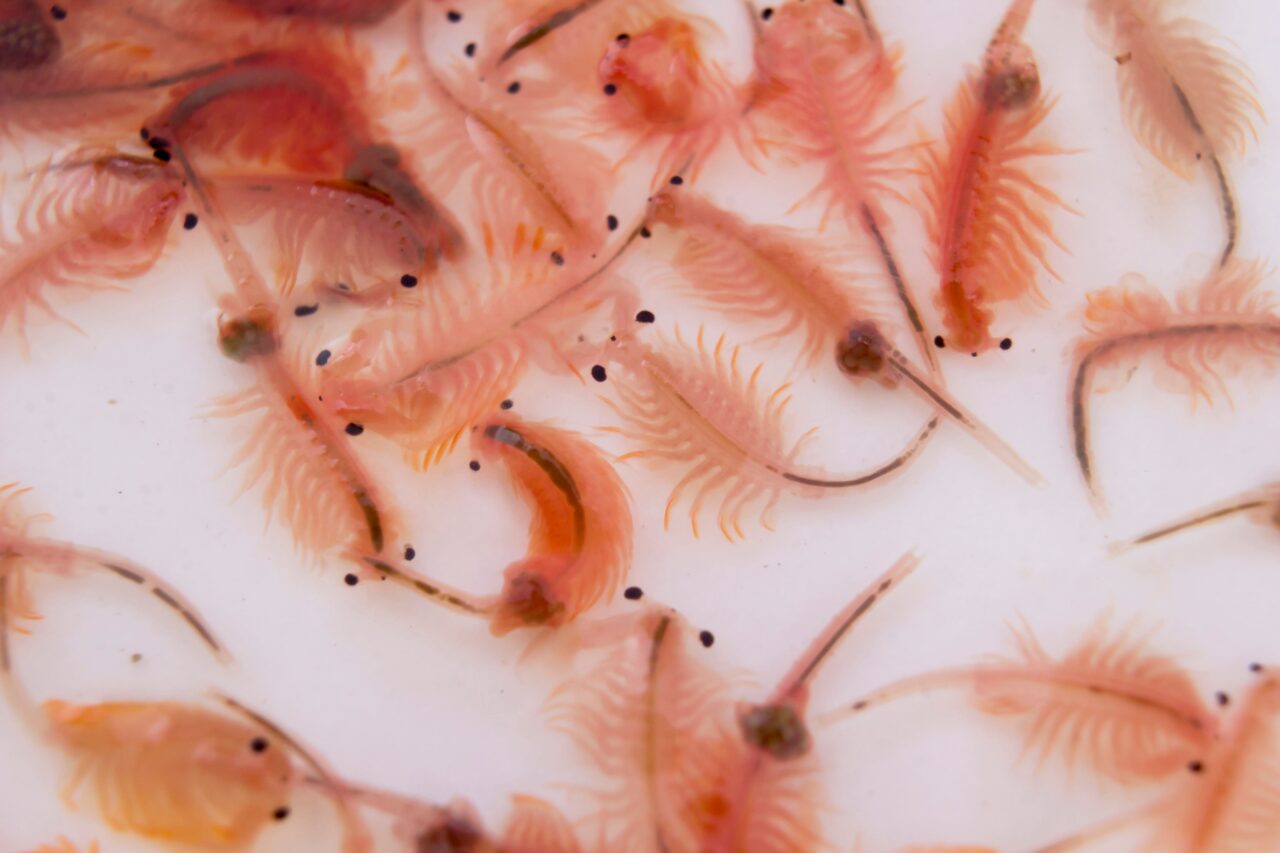
Brine shrimp are an exceptional food source for various aquatic larvae, including fish, newts, salamanders, frogs, and even shrimp. Newly hatched brine shrimp, or nauplii, provide critical nutrition during the early stages of development. However, some species, like Corydoras, may benefit more from alternatives such as microworms, which sink to the bottom where catfish fry swim, or vinegar eels, which are smaller and better suited for fish with tiny mouths.
Maximizing Nutritional Value
Brine shrimp nauplii have a narrow window of peak nutritional value, typically within 8 hours of hatching. Beyond this period, they start to lose their nutritional benefits as they use up their stored energy for growth. Feeding the nauplii within this timeframe ensures that your larvae receive the maximum benefit. Additionally, since brine shrimp are saltwater creatures introduced into a freshwater environment, uneaten shrimp may quickly lose their nutritional value or die, so frequent and small feedings are recommended.
Practical Considerations
While brine shrimp are invaluable in most hatcheries, they require timely management. If you’re new to aquaculture or find that managing a brine shrimp hatchery doesn’t suit your schedule, consider alternatives like microworms or vinegar eels, which may be easier to handle and less time-sensitive.
Our Brine Shrimp Hatchery Setup
We use a simple, effective setup for hatching brine shrimp, consisting of four one-liter water bottles, a heater to maintain 78°F, and a rotation system that ensures a continuous supply of freshly hatched nauplii. Each bottle is marked to indicate the stage of development—12 hours, 24 hours, and harvest. This method allows us to harvest and feed shrimp on a 12-hour cycle, providing a steady supply of live food for our fry.
Tips for Success
- Proper Timing: Harvest shrimp within 8 hours of hatching for maximum nutrition.
- Air Circulation: Ensure air tubes are fully submerged to circulate eggs properly.
- Flexible Feeding: Adapt your feeding schedule based on the development stage and environmental factors like temperature.
Beyond Brine Shrimp
As your fish and newts grow, they will eventually outgrow brine shrimp. Preparing for this transition early can save time and resources. Consider introducing Grindal worms, which offer a nutrient-rich alternative and can be easily cultured at home. While not a natural food source for all species, Grindal worms can be “gut-loaded” to enhance their nutritional value, making them an excellent follow-up to brine shrimp.