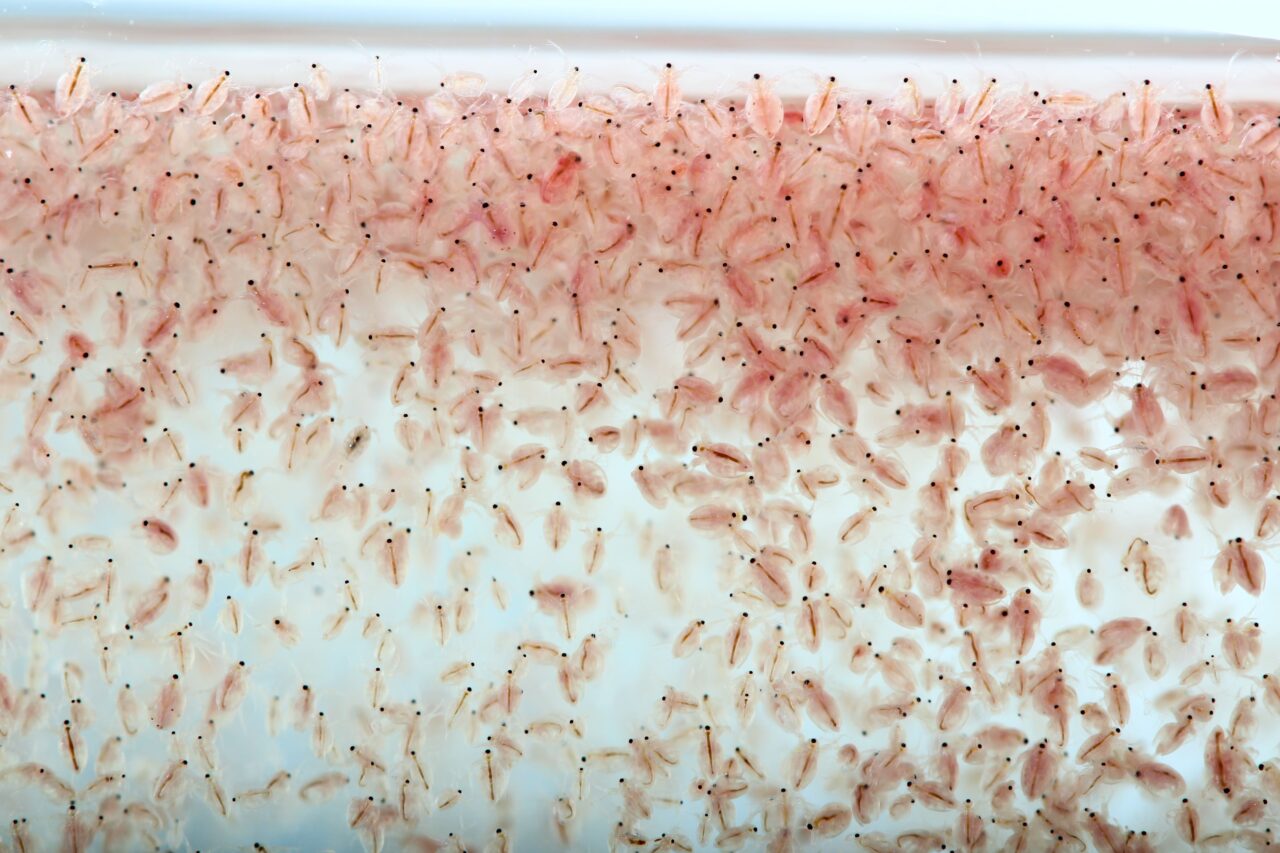
Best Uses for Daphnia:
- Betta fry from 1/2 inch
- Newt and salamander larvae
- Killifish fry from 1/2 inch
- Conditioning fish for spawning
- Guppy sub-adults and adults
- Fish up to 3 inches
Why Choose Daphnia?
Daphnia, often called water fleas due to their jerky swimming, are incredibly easy to culture. Most daphnia are female and give birth to live young regularly if they have enough food. Daphnia are sensitive to chlorine and heavy metals, so be mindful of water quality when culturing them.
We cultivate two main species—Daphnia magna and Daphnia pulex—as well as a related species called Moina (sometimes known as “Russian Daphnia”). Magna is larger but requires more resources and time to grow, while Moina is smaller, heat-resistant, and prolific, making it a good option in hot climates. However, Pulex is our favorite due to its appropriate size, ease of cultivation, and year-round availability.
Culturing Daphnia:
- Container: Use anything from quart jars to 25-gallon tubs. Larger containers stabilize the environment, making them easier to manage.
- Water: Use aged tap water, pond water, or water from an established aquarium. If using tap water, ensure it’s free of chlorine and heavy metals. For outdoor cultures, we rely on green water (algae-rich water) to sustain the daphnia.
- Starting the Culture: Fill the container halfway with water, add your daphnia culture, and gradually fill it over several days as the colony grows. Acclimate the daphnia slowly to avoid shock.
- Feeding: Daphnia are filter feeders that thrive on green water. If green water isn’t available, alternatives like Liquifry or yeast-water mixtures can be used. Add the food sparingly—enough to create a slight haze in the water without turning it milky.
Harvesting Daphnia:
We recommend daily harvesting to keep the culture healthy. Use a net to remove about half the water, then refill with green water. Regular harvesting also helps monitor the culture’s health, ensuring it stays productive.
Additional Tips:
- Monitor the culture frequently. If the environment becomes unfavorable, daphnia will start producing male offspring and ephippial (winter) eggs, which won’t hatch until exposed to cold cycles.
- Consider alternative live foods like Grindal worms if you lack the space or facilities to grow daphnia. Grindal worms can be cultivated indoors in small plastic boxes and are a great supplement to daphnia.
Daphnia are a versatile and nutritious food source for a wide range of fish and larvae. With a little attention to water quality and feeding, they can be a reliable part of your live food repertoire.